TL;DR
Cloud migration is about keeping data secure, complete, and usable before, during, and after the move. Plan carefully, avoid downtime, and choose a platform that lets your data stay flexible and scalable long-term.
Deciding on a cloud storage platform for migration is less about setup and more about how predictable and easy it is to manage your data every day.
The average data breach now costs $4.44 million, according to IBM. And Gartner makes it clear: most cloud failures aren’t the provider’s fault; they’re yours.
That’s the reality many companies overlook during migration planning.
Before you move anything, you need to evaluate more than cost and speed. You need to know that your data will arrive intact, scale without friction, and remain portable long after the migration is complete.
Data Protection Starts Before Migration
Most migration issues start before it even begins. Incomplete datasets, inconsistent file structures, and misaligned permissions can all create problems that only surface after migration. And by then, fixing them is time-consuming and disruptive.
According to Verizon’s Data Breach Investigations Report, more than two‑thirds of breaches involve a human element, including errors and misconfigurations. In migration scenarios, that translates to misplaced files, broken access controls, or overlooked data gaps.
This is why preparation matters. Before migration, your teams need visibility into:
- What data is being moved
- Whether it’s complete and structured
- How access and permissions will translate
During Migration: Maintaining Integrity Without Disruption
Once migration starts, the focus shifts to control and continuity.
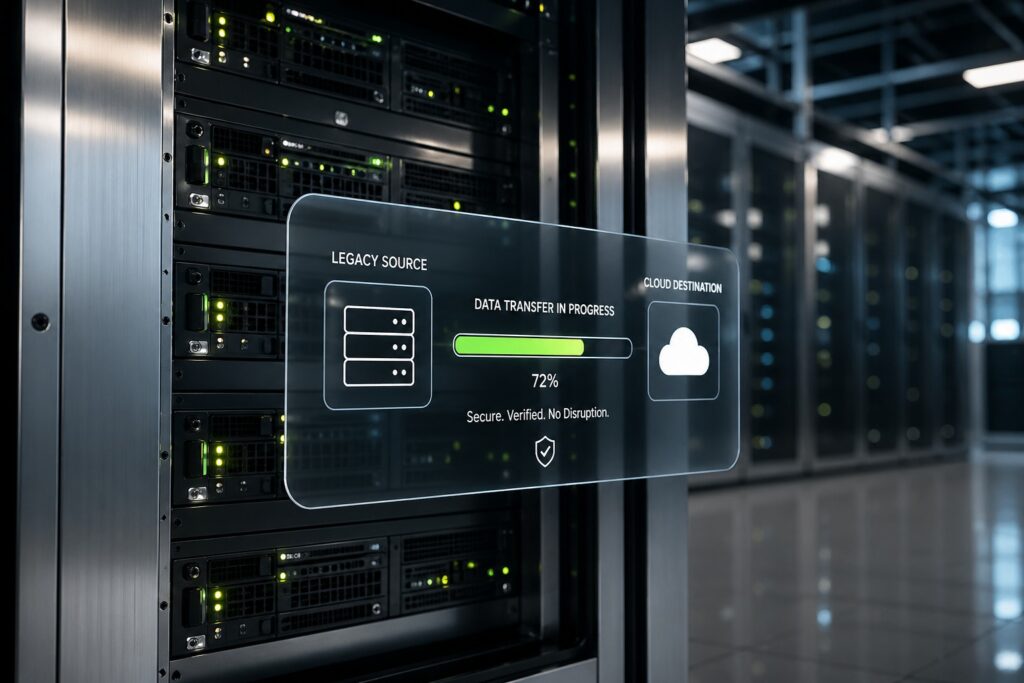
Data needs to move accurately and without interrupting operations. Even small inconsistencies during transfer can lead to larger operational issues once systems are live.
Downtime is a major factor here. According to Gartner, the average cost of downtime is approximately $5,600 per minute, based on older industry‑wide estimates. For enterprise environments, even short disruptions can quickly escalate into seven‑ or eight‑figure impacts when factoring in lost revenue, productivity, and recovery costs.
Key considerations during migration include:
- Can data be transferred without halting business operations?
- Is the process resilient to interruptions?
- Can transfers resume without starting over?
📌Request a demo to see how Cloudsfer enables secure, low-disruption data migration.
Data Portability: The Key to Long-Term Cloud Flexibility
Migration doesn’t end once your data reaches its destination.
Over time, your priorities will shift – driven by cost or operational needs. The challenge is that many platforms are designed to store data, not to move it again.
Without portability, organizations risk vendor lock-in, high re-migration costs, and limited control when changes are needed.
Cloudsfer enables organizations to move data when needed, without friction or platform constraints. It gives you long-term control over how and where data is managed.
Scalability: Planning for What Comes Next
Migration planning often focuses on current needs, but did you know that data environments rarely stay the same?
Data growth creates a challenging question:
Will your chosen platform still work when your data doubles or triples?
A scalable approach to cloud storage should support:
- Large and growing datasets
- Multiple data sources and destinations
- The ability to expand without reworking the entire architecture
Managing Data Across the Entire Migration Lifecycle
Migration risk spans the entire process.
- Before migration, risks come from incomplete or unstructured data
- During migration, risks include interruption, inconsistency, and downtime
- After migration, risks shift to accessibility, control, and long-term flexibility
A fragmented approach leaves gaps. A complete strategy connects all three.
Cloudsfer supports this lifecycle by:
- Preparing and structuring data before migration
- Preserving data integrity and minimizing disruption during migration
- Enabling ongoing flexibility and control after migration
This turns migration into a controlled process, rather than a one-time event with unpredictable outcomes.
Final Thought
Cloud migration fails because critical decisions are made without fully understanding their long-term impact.
Choosing a cloud storage platform is one of those decisions.
It determines whether your data remains intact, whether your operations stay uninterrupted, and whether your organization can adapt as requirements evolve.
FAQs
1. Why is data preparation important before cloud migration?
Preparing your data ensures it is complete, well-structured, and properly organized, reducing errors and issues after migration.
2. How can I avoid downtime during migration?
Choose a solution that enables continuous data transfer, handles interruptions, and resumes processes without restarting.
3. What is data portability, and why does it matter?
Data portability means you can move your data easily between platforms, helping you avoid vendor lock-in and stay flexible.
4. How do I ensure my cloud setup can scale?
Pick a platform that supports growing data volumes, multiple sources, and expansion without major changes.
5. How can Cloudsfer support long-term data management?
Cloudsfer allows you to move, manage, and control your data anytime, giving you flexibility even after migration is complete.