TL;DR
Backups just are not enough anymore. In 2026, a strong enterprise backup strategy means being able to restore large amounts of clean data quickly after a ransomware attack by using a secure, scalable, and well-tested cloud backup solution.
What we’re seeing across the enterprise landscape is this:
2 out of 5 organizations don’t have a backup problem. They have a restoration problem.
They have dashboards showing successful backup jobs.
They have policies, retention schedules, and off-site copies.
But when asked a harder question like:
“Can you restore 80TB of clean, verified data within 24 – 48 hours after a ransomware attack?”
That is where the confidence drops.
Because in 2026, a reliable enterprise backup strategy isn’t judged by how well it stores data. It’s judged by how predictably it restores it, such as at scale, under pressure, and without compliance fallout.
This blog outlines the essential pillars of a scalable and reliable backup solution, one that strengthens your cloud backup strategy, defends against ransomware, and ensures your architecture is built for recovery at scale.
1. Backups That Store Aren’t Enough. You Must Restore
With enterprise data, it’s no surprise that backups sometimes fail. What catches us off guard is how often restores do too.
Research shows that even when 92 % of businesses have backups, more than 30 % fail to restore data successfully after a real ransomware incident. In those cases, companies ended up more likely to pay the ransom just to get their data back.
A failed restore means weeks of downtime, operational disruption, and lost trust.
Consider a multinational retailer with distributed systems that might run nightly backups that look successful in dashboards, but if those backups can’t be restored quickly, the business can’t open stores, process orders, or serve customers when systems fail.
That’s why, in 2026 and beyond, an enterprise backup strategy must be built around the reliability of restores, not just the completion of backup itself
2. Ransomware Is Targeting Backups First
Ransomware not only encrypts files randomly. Attackers now look for weak points in backup systems before they strike.
Industry data shows ransomware attacks are still increasing and are frequently part of broader breaches.
In many incidents, threat actors will try to delete or corrupt backups so that the victim organization cannot recover without paying a ransom.
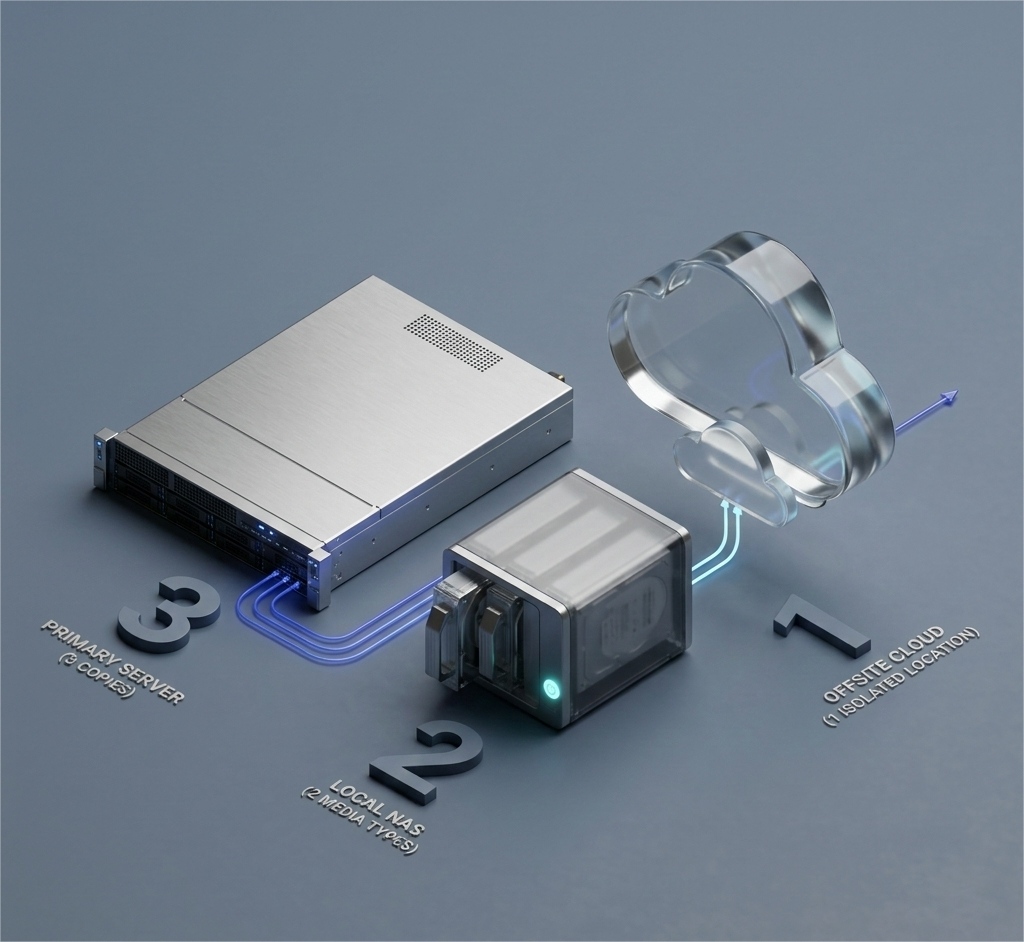
Instead of relying on a single protection layer, enterprises should anchor their ransomware backup solution to the proven 3-2-1 backup rule:
- 3 copies of your data – one primary and at least two backups
- 2 different storage types – for example, cloud and secondary storage
- 1 copy stored offsite and isolated – protected from direct access or network compromise
3. Cloud Backup Is More Effective When Designed Right
Cloud platforms now host massive volumes of operational, transactional, and SaaS-driven data. A strong cloud backup strategy has become foundational.
But storing backups in the same cloud tenant isn’t enough. If credentials are compromised, attackers may reach both production and backup data.
That is how Cloudsfer adds value.
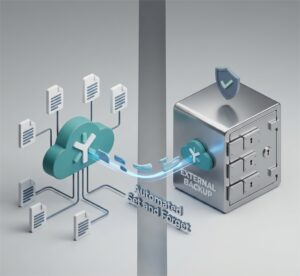
Cloudsfer enables secure data replication across separate cloud environments and tenants, helping organizations create real separation between primary systems and recovery copies. This supports a stronger 3-2-1 strategy and reduces single-environment risk.
📌Contact Cloudsfer for a free demo
4. Automation and Validation Are Essential
A 2025 survey found trust in backup systems is low: many teams pay for extra protection out of concern that their backup solution won’t work when needed.
Another data point from backup validation research shows many organizations skip routine backup tests. That means corrupted backups often go unnoticed until disaster strikes.
Meaning that backups must be verified through occasional restore testing.
Bottom Line
Data loss is still a major business risk. In one dataset, nearly 68 % of organizations experienced significant data loss, and data loss was linked to high operational and financial costs.
Here, the real cost is the downtime, the recovery effort, and the business interruption that follows.